
The increasing frequency of floods, storms, wildfires, and heatwaves reminds us that the built environment must do more than provide functionality it must withstand the unpredictable forces of a changing climate. As climate-related disasters intensify across the United States and beyond, resilient infrastructure has become one of the most urgent priorities in modern engineering.
At EcoStruct Engineering & Management, we believe resilience is not optional it is the foundation of sustainability. Our mission is to help communities prepare, adapt, and thrive by integrating climate intelligence, durable materials, and risk-mitigation strategies into every stage of infrastructure design and management.
Understanding Resilient Infrastructure
Resilient infrastructure refers to systems and structures that can anticipate, absorb, recover from, and adapt to adverse climate events. Whether it’s a bridge designed to resist flooding or a power grid protected from extreme temperatures, resilience ensures that essential services continue even when disasters strike.
EcoStruct approaches resilience as a multi-dimensional framework that combines:
Engineering Strength: Designing buildings, bridges, and drainage systems capable of withstanding storms, earthquakes, and rising sea levels.
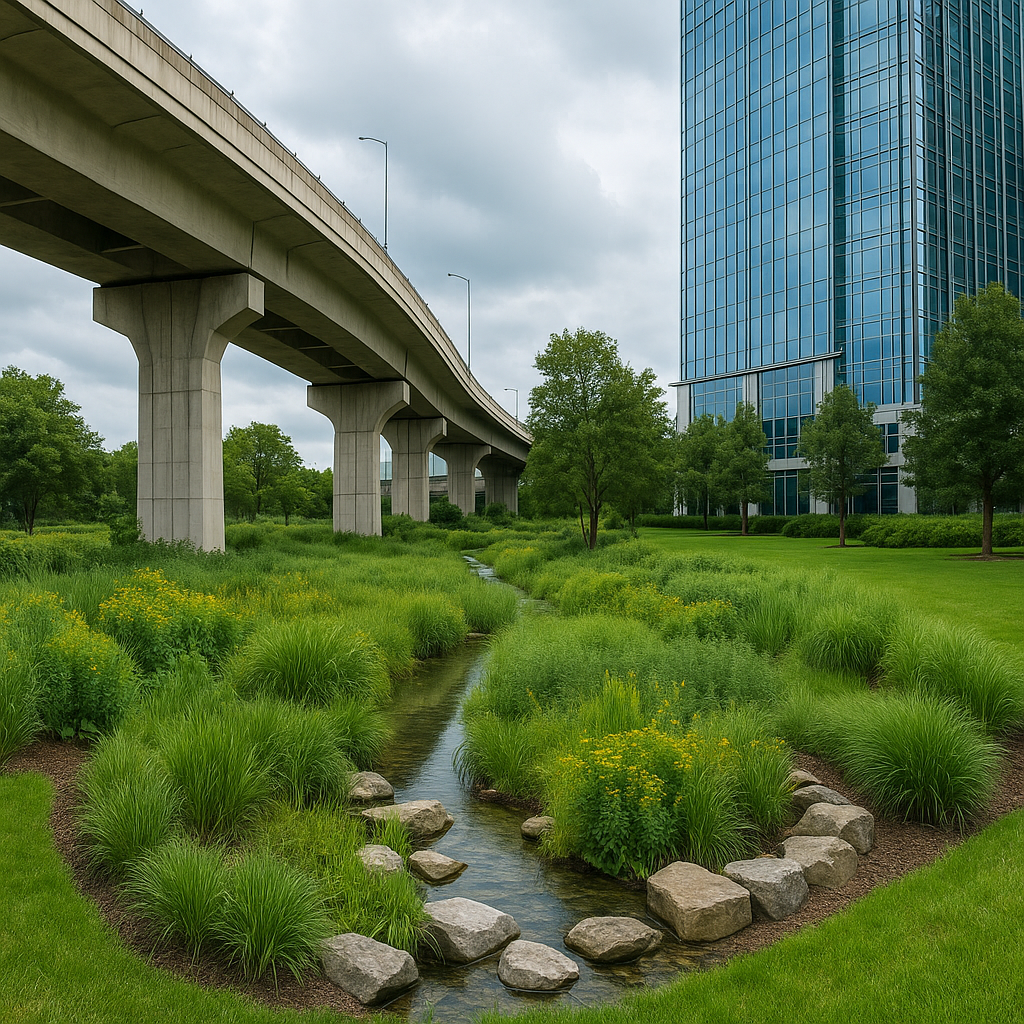
Environmental Adaptability: Incorporating nature-based solutions like wetlands, permeable pavements, and vegetated buffers.
Technological Intelligence: Using predictive analytics, GIS modeling, and climate data integration to anticipate vulnerabilities before they become failures.
By merging these elements, we ensure that infrastructure remains not just functional but future-ready.
Assessing Climate Risks at the Design Stage
The best time to build resilience is before the first foundation is laid. EcoStruct uses climate risk assessment tools and GIS mapping to evaluate each project site for exposure to natural hazards such as flooding, heat stress, and soil instability.
This data-driven approach allows our engineers to develop designs tailored to local conditions. For instance:
In flood-prone zones, we design elevated foundations, stormwater retention basins, and green drainage systems.
In heat-affected urban centers, we integrate cool roofing materials, urban green corridors, and reflective pavements.
For coastal developments, we consider erosion control, seawall reinforcement, and adaptive land-use planning.
By embedding these strategies into project planning, EcoStruct ensures that communities are safer and infrastructure remains reliable for decades.
Innovation in Materials and Design
The next frontier of resilient infrastructure lies in material science. EcoStruct is at the forefront of applying storm-resistant and sustainable materials to ensure both longevity and environmental responsibility.
Our design palette includes:
Fiber-reinforced concrete for enhanced structural strength.
Corrosion-resistant steel for coastal and humid environments.
Permeable concrete to reduce flooding and support groundwater recharge.
Composite insulation panels that improve energy efficiency while withstanding high temperatures.
We also integrate green roofs, solar-integrated facades, and smart shading systems that not only protect structures but also reduce carbon emissions and operational costs.
The Role of Technology in Building Resilience
Technology plays a pivotal role in predicting, preventing, and responding to climate impacts. EcoStruct leverages advanced software like BIM (Building Information Modeling) and AI-driven analytics to simulate environmental stress scenarios and optimize designs accordingly.
Through real-time monitoring systems, we track environmental conditions during construction and operation. IoT-enabled sensors measure structural performance under stress, allowing proactive maintenance and early detection of potential issues.
This continuous feedback loop ensures that projects remain resilient throughout their entire lifecycle not just at completion.
Aligning with National Priorities
EcoStruct’s resilience strategy aligns closely with U.S. federal initiatives such as:
The Infrastructure Investment and Jobs Act (IIJA) which allocates funding to strengthen climate resilience across public infrastructure.
The FEMA Building Resilient Infrastructure and Communities (BRIC) program which promotes mitigation and preparedness in vulnerable areas.
The Department of Energy’s Resilient Energy Systems initiatives supporting renewable and grid-secure development.
By designing projects that comply with these national frameworks, EcoStruct contributes directly to building a safer, more sustainable America.
Resilience Through Community and Collaboration
Engineering resilience isn’t only about structures it’s about people. At EcoStruct, we collaborate with local governments, community leaders, and academic partners to identify specific vulnerabilities and develop customized resilience strategies.
Our Community Resilience Workshops provide technical guidance and training for municipal planners and construction teams, empowering them to adopt sustainable practices in their own operations.
We also prioritize inclusivity by encouraging women-led participation in climate engineering projects, ensuring that diverse perspectives shape the infrastructure of the future.
From Recovery to Prevention
Historically, much of infrastructure investment has focused on recovery after disasters. EcoStruct advocates for a paradigm shift from reactive rebuilding to proactive prevention. It’s more cost-effective and socially beneficial to design systems that can endure stress than to repeatedly repair them.
By investing in resilient design now, communities can save millions in future disaster recovery costs, protect lives, and preserve economic stability.
The Future of Climate-Resilient Design
As climate conditions become more extreme, the demand for innovative, adaptive engineering will only grow. EcoStruct is committed to being a leader in this transformation integrating data science, green engineering, and policy awareness to redefine how resilience is built into every layer of infrastructure.
We envision a future where every building, bridge, and drainage system contributes not only to urban growth but also to environmental harmony and human safety. Through smart planning and responsible leadership, resilience becomes not just a design principle but a culture.
**
Conclusion**
Climate resilience is no longer a theoretical goal; it is an engineering necessity. At EcoStruct Engineering & Management, we design with foresight, innovate with purpose, and build with care.
Every project is a promise to create structures that protect, adapt, and endure. By combining sustainable design, digital intelligence, and community collaboration, we are helping shape a world that is ready for tomorrow’s challenges.