Uncategorized

Uncategorized

Engineering the Future: Why Sustainability and Technology Must Coexist

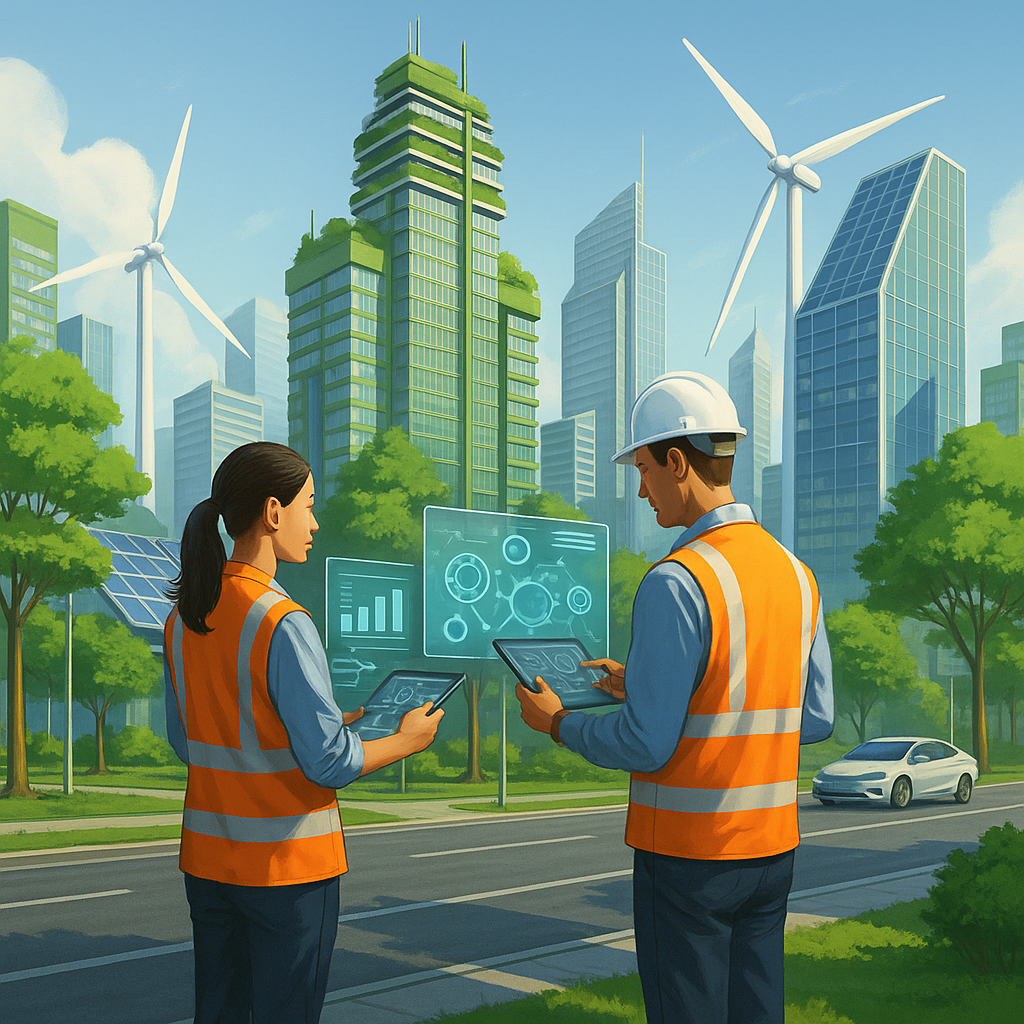
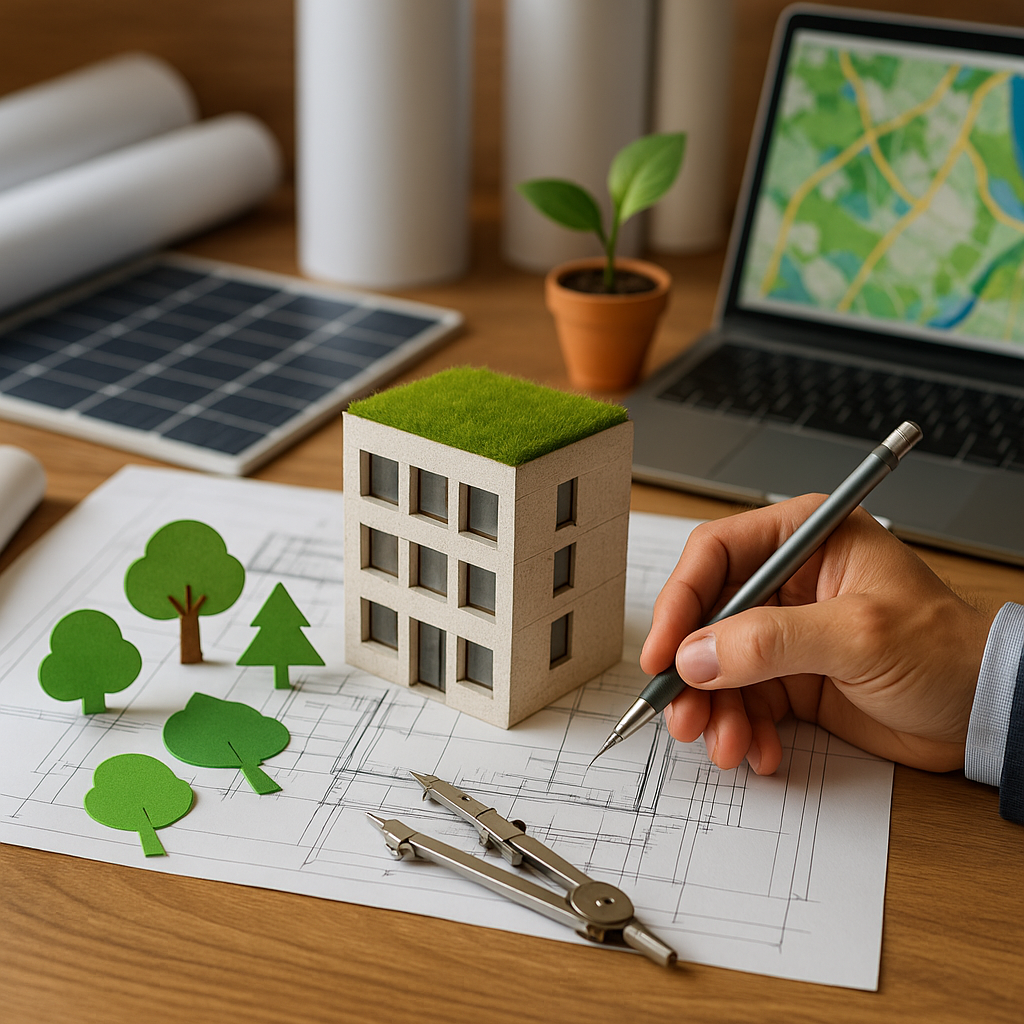
The world of engineering is evolving faster than ever. Emerging technologies such as artificial intelligence (AI), renewable energy systems, and smart infrastructure are redefining how we design, manage, and sustain our built environment. Yet, as innovation continues to accelerate, one essential truth remains: technology and sustainability must coexist. At EcoStruct Engineering & Management, we believe that the future of engineering depends on the seamless integration of technological innovation with environmental responsibility. Together, these two forces can create a future that is not only efficient and intelligent but also sustainable and resilient. In the past, technological progress in engineering primarily focused on speed, cost reduction, and efficiency. While these priorities remain important, the challenges of the 21st century climate change, resource scarcity, and urbanization—require a broader vision. Sustainability ensures that our advancements today do not compromise the needs of future generations. At EcoStruct, we combine digital innovation with eco conscious design to create infrastructure that performs efficiently while minimizing environmental impact. Through AI-powered analytics, IoT-enabled sensors, and Building Information Modeling (BIM), we simulate project outcomes, predict energy consumption, and optimize material usage to reduce waste and carbon footprints. Every project we deliver reflects our belief that smart design must also be sustainable design. Artificial intelligence has become one of the most transformative forces in engineering today. At EcoStruct, we use AI for predictive modeling, digital twin simulations, and data-driven decision-making to enhance project performance. AI allows us to forecast structural behavior, assess environmental conditions, and identify the most sustainable materials for each project. With IoT based monitoring systems, our engineers can track real-time energy use, structural integrity, and environmental performance. This technology-driven approach not only extends infrastructure lifespans but also significantly lowers maintenance costs and resource waste. Renewable energy plays an equally vital role in shaping sustainable infrastructure. The future of engineering lies in moving away from fossil fuel dependency toward cleaner, renewable systems. Our design and consulting solutions integrate solar panels, micro wind turbines, and geothermal energy systems directly into urban and industrial projects. By combining renewable energy with smart grid systems and battery storage, EcoStruct helps clients achieve energy self-sufficiency while reducing operational costs. These renewable ecosystems are not just environmentally friendly they are resilient, efficient, and aligned with the growing demand for sustainable urban living. Digital transformation also enhances collaboration and accountability across all stages of a project. By using cloud-based project management platforms such as Zoho Projects and BIM 360, our teams ensure that every stakeholder from architects to engineers to clients can work together in real time. This digital transparency reduces delays, eliminates paper-based communication, and minimizes travel related emissions, directly contributing to lower carbon footprints. Furthermore, these digital records provide complete traceability of materials, costs, and environmental data, making sustainable project management both measurable and verifiable. EcoStruct’s commitment to sustainability also extends to national and global objectives. Our projects align with the U.S. Infrastructure Investment and Jobs Act (IIJA), which emphasizes carbon-neutral construction, renewable energy expansion, and green job creation. By integrating sustainability into every stage of project planning and execution, we actively contribute to the United States’ 2030 infrastructure and clean energy targets. Through low-carbon construction techniques, energy efficient systems, and community-based design, we aim to deliver not just structures but long-term environmental value. At the heart of sustainable innovation are the people who bring these technologies to life. EcoStruct is dedicated to empowering the next generation of engineers and leaders who will carry forward the principles of ethical and sustainable engineering. Our Women in Engineering Mentorship Program provides technical training, leadership development, and real-world experience to aspiring professionals. By nurturing diversity and inclusion, we ensure that the future of engineering reflects a balance of innovation, empathy, and social responsibility. We stand at a defining moment in human progress. One path leads to short-term efficiency and consumption; the other leads to long-term sustainability and shared prosperity. At EcoStruct Engineering & Management, we have chosen the path of balance where technology serves not only to build faster or smarter but also to build responsibly. We envision a future of cities powered by clean energy, buildings that produce more power than they consume, and infrastructures that coexist with nature rather than compete against it. In this vision, the most advanced engineering isn’t measured by how tall a building stands or how fast a system operates it’s measured by how wisely it uses resources and how deeply it respects the planet. By merging innovation with sustainability, EcoStruct is engineering a legacy that supports both people and the planet. The coexistence of technology and sustainability isn’t just our strategy it’s our promise to the future.
Uncategorized

Project Resilience in a Changing Climate

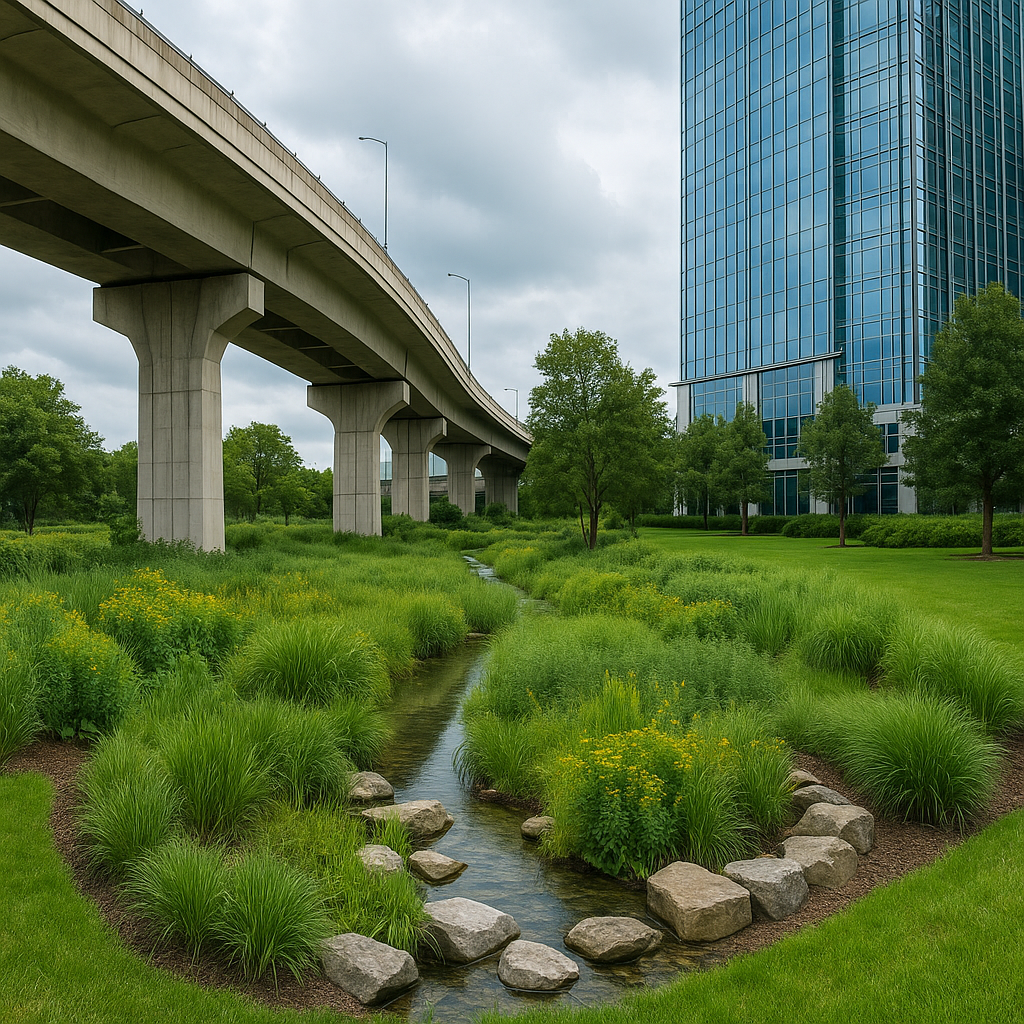
The increasing frequency of floods, storms, wildfires, and heatwaves reminds us that the built environment must do more than provide functionality it must withstand the unpredictable forces of a changing climate. As climate-related disasters intensify across the United States and beyond, resilient infrastructure has become one of the most urgent priorities in modern engineering. At EcoStruct Engineering & Management, we believe resilience is not optional it is the foundation of sustainability. Our mission is to help communities prepare, adapt, and thrive by integrating climate intelligence, durable materials, and risk-mitigation strategies into every stage of infrastructure design and management. Understanding Resilient Infrastructure Resilient infrastructure refers to systems and structures that can anticipate, absorb, recover from, and adapt to adverse climate events. Whether it’s a bridge designed to resist flooding or a power grid protected from extreme temperatures, resilience ensures that essential services continue even when disasters strike. EcoStruct approaches resilience as a multi-dimensional framework that combines: Engineering Strength: Designing buildings, bridges, and drainage systems capable of withstanding storms, earthquakes, and rising sea levels. Environmental Adaptability: Incorporating nature-based solutions like wetlands, permeable pavements, and vegetated buffers. Technological Intelligence: Using predictive analytics, GIS modeling, and climate data integration to anticipate vulnerabilities before they become failures. By merging these elements, we ensure that infrastructure remains not just functional but future-ready. Assessing Climate Risks at the Design Stage The best time to build resilience is before the first foundation is laid. EcoStruct uses climate risk assessment tools and GIS mapping to evaluate each project site for exposure to natural hazards such as flooding, heat stress, and soil instability. This data-driven approach allows our engineers to develop designs tailored to local conditions. For instance: In flood-prone zones, we design elevated foundations, stormwater retention basins, and green drainage systems. In heat-affected urban centers, we integrate cool roofing materials, urban green corridors, and reflective pavements. For coastal developments, we consider erosion control, seawall reinforcement, and adaptive land-use planning. By embedding these strategies into project planning, EcoStruct ensures that communities are safer and infrastructure remains reliable for decades. Innovation in Materials and Design The next frontier of resilient infrastructure lies in material science. EcoStruct is at the forefront of applying storm-resistant and sustainable materials to ensure both longevity and environmental responsibility. Our design palette includes: Fiber-reinforced concrete for enhanced structural strength. Corrosion-resistant steel for coastal and humid environments. Permeable concrete to reduce flooding and support groundwater recharge. Composite insulation panels that improve energy efficiency while withstanding high temperatures. We also integrate green roofs, solar-integrated facades, and smart shading systems that not only protect structures but also reduce carbon emissions and operational costs. The Role of Technology in Building Resilience Technology plays a pivotal role in predicting, preventing, and responding to climate impacts. EcoStruct leverages advanced software like BIM (Building Information Modeling) and AI-driven analytics to simulate environmental stress scenarios and optimize designs accordingly. Through real-time monitoring systems, we track environmental conditions during construction and operation. IoT-enabled sensors measure structural performance under stress, allowing proactive maintenance and early detection of potential issues. This continuous feedback loop ensures that projects remain resilient throughout their entire lifecycle not just at completion. Aligning with National Priorities EcoStruct’s resilience strategy aligns closely with U.S. federal initiatives such as: The Infrastructure Investment and Jobs Act (IIJA) which allocates funding to strengthen climate resilience across public infrastructure. The FEMA Building Resilient Infrastructure and Communities (BRIC) program which promotes mitigation and preparedness in vulnerable areas. The Department of Energy’s Resilient Energy Systems initiatives supporting renewable and grid-secure development. By designing projects that comply with these national frameworks, EcoStruct contributes directly to building a safer, more sustainable America. Resilience Through Community and Collaboration Engineering resilience isn’t only about structures it’s about people. At EcoStruct, we collaborate with local governments, community leaders, and academic partners to identify specific vulnerabilities and develop customized resilience strategies. Our Community Resilience Workshops provide technical guidance and training for municipal planners and construction teams, empowering them to adopt sustainable practices in their own operations. We also prioritize inclusivity by encouraging women-led participation in climate engineering projects, ensuring that diverse perspectives shape the infrastructure of the future. From Recovery to Prevention Historically, much of infrastructure investment has focused on recovery after disasters. EcoStruct advocates for a paradigm shift from reactive rebuilding to proactive prevention. It’s more cost-effective and socially beneficial to design systems that can endure stress than to repeatedly repair them. By investing in resilient design now, communities can save millions in future disaster recovery costs, protect lives, and preserve economic stability. The Future of Climate-Resilient Design As climate conditions become more extreme, the demand for innovative, adaptive engineering will only grow. EcoStruct is committed to being a leader in this transformation integrating data science, green engineering, and policy awareness to redefine how resilience is built into every layer of infrastructure. We envision a future where every building, bridge, and drainage system contributes not only to urban growth but also to environmental harmony and human safety. Through smart planning and responsible leadership, resilience becomes not just a design principle but a culture.**Conclusion** Climate resilience is no longer a theoretical goal; it is an engineering necessity. At EcoStruct Engineering & Management, we design with foresight, innovate with purpose, and build with care. Every project is a promise to create structures that protect, adapt, and endure. By combining sustainable design, digital intelligence, and community collaboration, we are helping shape a world that is ready for tomorrow’s challenges.

Uncategorized

The Future of Civil Design: Balancing Innovation and Environmental Responsibility

As cities expand and the demand for infrastructure rises, civil design must evolve to meet the dual challenge of innovation and environmental responsibility. The next generation of engineers faces a defining question: how can we build smarter, stronger, and faster while protecting the planet we depend on? At EcoStruct Engineering & Management, our answer lies in harmonizing technology with sustainability. We believe that the future of civil design depends not only on what we build but also on how responsibly we build it. Every design decision from selecting materials to energy modeling has an environmental impact, and we aim to make that impact a positive one. Green Materials and Low-Carbon Construction One of the most pressing issues in civil design today is the carbon footprint of construction materials. Cement, steel, and glass staples of modern infrastructure are also major sources of carbon emissions. That’s why EcoStruct is leading the shift toward green and low-carbon materials that reduce environmental harm without compromising durability or cost efficiency. We actively integrate: By combining innovative material science with advanced design, we create projects that are both structurally sound and environmentally progressive. Water-Efficient and Climate-Resilient Designs Water is one of the most critical yet underappreciated elements in sustainable design. EcoStruct incorporates water-efficient systems that minimize waste, encourage recycling, and mitigate flooding risks. Our engineers design green drainage systems, permeable pavements, and rainwater harvesting structures that reduce stormwater runoff and replenish local water tables. In coastal or flood-prone regions, our climate-resilient structures employ elevated foundations, storm-resistant materials, and erosion control measures. By planning for future climate risks, we ensure infrastructure longevity and community safety. Digital Tools Empowering Sustainability The digital transformation of engineering has made it possible to design with unprecedented precision. EcoStruct’s design teams use Building Information Modeling (BIM) and AutoCAD Civil 3D to visualize every detail before construction begins. These platforms enable us to analyze energy efficiency, material usage, and lifecycle costs ensuring sustainability is embedded in every phase of a project. Through BIM-enabled simulations, we assess solar orientation, thermal comfort, and material energy performance, helping clients make data-driven decisions that save energy and money. Our GIS mapping technology further supports environmental planning by identifying sensitive ecosystems, optimizing site locations, and minimizing ecological disruption. This digital integration transforms design from a static process into an intelligent, adaptive system one that constantly learns and improves with every project. Collaboration for a Sustainable Tomorrow EcoStruct believes that sustainability thrives through collaboration and knowledge-sharing. That’s why we work with universities, research institutes, and NGOs to advance the study of eco-engineering practices. Together, we develop design methodologies that not only meet current environmental standards but also set new benchmarks for the industry. Our partnerships allow us to pilot experimental materials, apply emerging technologies like AI-driven life-cycle analysis, and expand our research into renewable infrastructure systems. These collaborations ensure that EcoStruct remains at the forefront of sustainable innovation while contributing to the global body of environmental engineering knowledge. Social Sustainability and Women in Engineering Sustainability isn’t only about protecting the planet it’s also about empowering people. At EcoStruct, we advocate for diversity and inclusion within engineering by promoting women’s leadership in sustainable design. Through our Women in Engineering Mentorship Program, we encourage young professionals to explore eco-conscious engineering careers and take on leadership roles in infrastructure development. By nurturing diverse perspectives, we strengthen the creativity and empathy needed to solve global challenges. Our projects are a reflection of this belief designed not only for performance but also for the well-being of communities. The Balance Between Innovation and Responsibility Innovation drives progress, but without responsibility, it can lead to environmental and social harm. EcoStruct is committed to achieving balance leveraging modern technology to create infrastructure that enhances life while preserving nature. For instance, our recent initiatives combine renewable energy systems, such as solar-integrated facades and geothermal heating, with intelligent monitoring platforms that track energy consumption in real time. This holistic approach ensures that every innovation serves both functional and environmental purposes. Our philosophy aligns with the broader goals of the U.S. Infrastructure Investment and Jobs Act (IIJA) and the Department of Energy’s Clean Energy Initiatives, which emphasize sustainability as a cornerstone of national progress. Designing for the Next Generation Civil design today is about more than blueprints and concrete — it’s about creating a legacy of resilience and responsibility. The next generation of engineers will inherit a world facing extreme weather, resource scarcity, and rapid urbanization. Our job is to equip them with the tools, technologies, and values needed to design with conscience. At EcoStruct Engineering & Management, we are proud to be part of that transformation. Every structure we design is a step toward a future where innovation and sustainability are not opposing forces but partners in progress.By embracing this balance, we build more than infrastructure we build trust, purpose, and a greener tomorrow.

Uncategorized

Smart Construction Oversight: How Technology Shapes Safer Projects

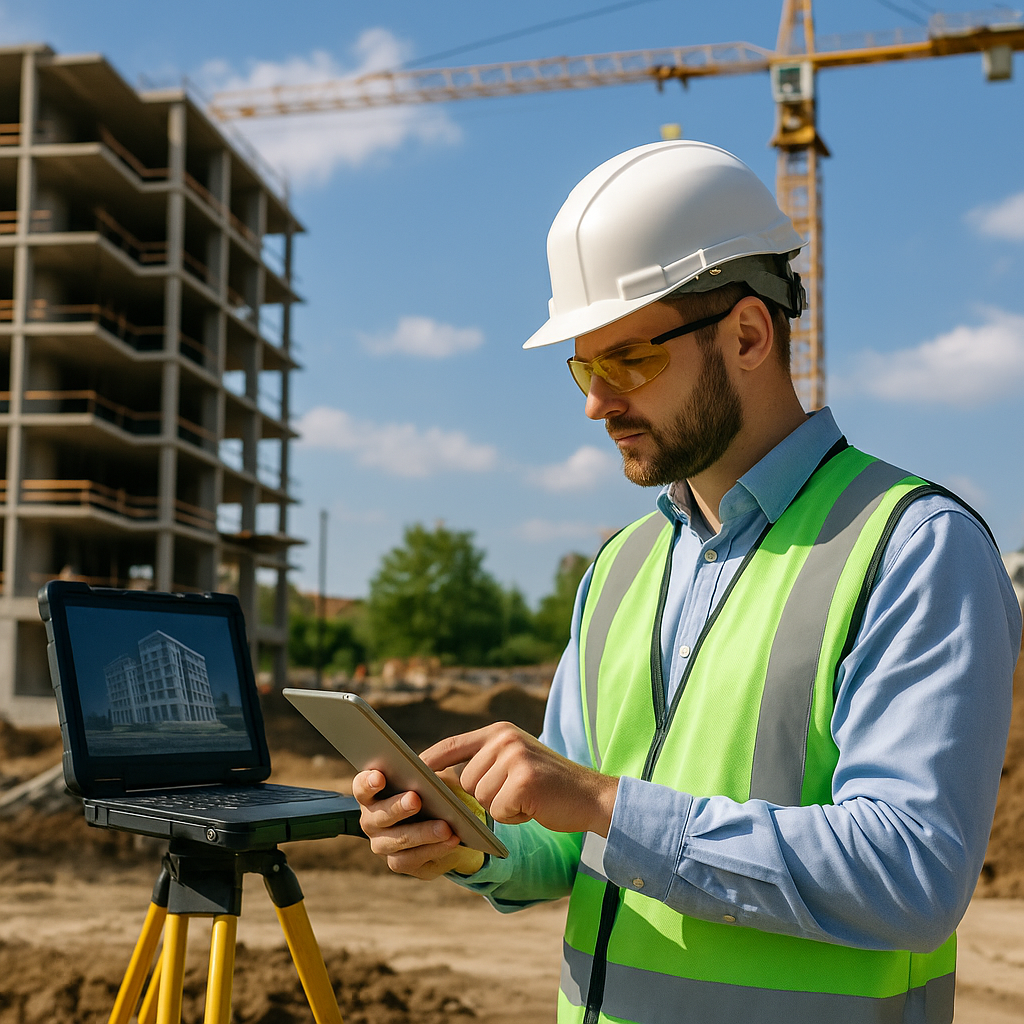
In an era where efficiency and safety are equally vital, the construction industry is undergoing a profound transformation. The integration of digital tools and smart management systems has revolutionized how projects are designed, monitored, and delivered. Today, technology not only improves construction speed and accuracy but also plays a crucial role in enhancing worker safety, environmental compliance, and cost-effectiveness. At EcoStruct Engineering & Management, we believe that construction oversight must be both intelligent and human-centered. Our approach combines cutting-edge technology with rigorous safety protocols to ensure every project is delivered efficiently, sustainably, and securely from concept to completion. The Digital Revolution in Construction Management Traditional oversight relied heavily on manual inspection and paper documentation, which often led to miscommunication, errors, and delays. In contrast, today’s construction ecosystem thrives on real-time collaboration, data visualization, and automated reporting. EcoStruct leverages a suite of integrated technologies including AutoCAD, Building Information Modeling (BIM), Zoho Projects, and GIS mapping to provide a unified, transparent, and efficient workflow. Ensuring Compliance and Worker Safety Safety is not just a legal requirement; it is the foundation of responsible construction. EcoStruct integrates OSHA-compliant safety standards into every phase of project oversight. By combining digital checklists, IoT-based monitoring, and predictive analytics, we proactively identify and mitigate risks on-site. Our safety management system includes: These innovations have led to measurable improvements in both safety and efficiency. Projects are completed faster, with fewer accidents, and with reduced downtime. Environmental Oversight and Compliance EcoStruct’s oversight process also ensures that every project adheres to environmental safety regulations and sustainable practices. Using data analytics and digital tracking tools, we monitor emissions, waste management, and material sourcing. This not only aligns with EPA and IIJA environmental goals but also demonstrates our commitment to building projects that minimize ecological impact. We implement eco-design monitoring systems that track the environmental performance of materials and construction methods. Through this continuous evaluation, EcoStruct helps clients maintain compliance while reducing operational costs and improving public trust. Real-Time Monitoring: The Key to Modern Project Success Real-time oversight is one of the most transformative developments in engineering management. Through cloud-based systems and BIM-linked sensors, EcoStruct’s teams can monitor progress, safety metrics, and environmental data simultaneously. For example, during on-site inspections, engineers use tablets connected to BIM models and Zoho Projects. Any issue whether a design mismatch, quality defect, or safety concern can be documented instantly with photos and corrective recommendations. This data syncs across the system, alerting the entire project team in seconds. This instant data-sharing ecosystem eliminates delays and miscommunication, empowering teams to make fast, evidence-based decisions. In large-scale public infrastructure projects, this capability can save thousands of dollars and prevent costly rework. The Broader Impact: Technology as a Safety Net The digital transformation of construction oversight is more than just a productivity boost it’s a safety net for people, assets, and the environment. Every digital tool we deploy at EcoStruct is designed with one question in mind: How can we make construction safer and more sustainable? By adopting digital oversight systems, we: This approach aligns with the Infrastructure Investment and Jobs Act (IIJA) and U.S. Department of Labor initiatives promoting safer workplaces, smart construction practices, and workforce digitization. The Future of Smart Construction Oversight Looking ahead, the fusion of AI, robotics, and augmented reality (AR) will further redefine construction oversight. EcoStruct is already exploring next-generation tools that allow engineers to visualize project progress through AR headsets, automate compliance checks with AI auditing, and deploy drones for site surveillance and data collection. As we continue to innovate, one thing remains constant our commitment to safety, sustainability, and excellence. We believe that technology should empower people, not replace them. Smart oversight is not about removing the human touch; it’s about enhancing it with precision, insight, and care. At EcoStruct Engineering & Management, we are not just building infrastructure we are building trust through technology. Every project is a step toward a future where safety, sustainability, and innovation coexist seamlessly.

Uncategorized

Sustainable Engineering Management: The Core of Modern Infrastructure

As cities grow and technology evolves, the way we build and manage infrastructure must also change. The future of development depends on sustainability not just in design, but in the entire lifecycle of a project. Sustainable engineering management has emerged as the key to ensuring that modern infrastructure supports both economic growth and environmental responsibility. It is no longer enough to construct buildings or roads that merely serve functional purposes; the new standard demands efficiency, resilience, and ecological balance. At EcoStruct Engineering & Management, our mission is to redefine how infrastructure is planned, built, and maintained. We believe that the most successful projects are those that integrate sustainability, technology, and cost-effective management from the ground up. By embedding eco-design principles into our operations, we reduce waste, conserve energy, and minimize carbon footprints while delivering reliable and high-performing engineering solutions. Integrating Sustainability into Every Phase Sustainability begins long before construction starts. It begins at the planning and design stage, where every decision from the choice of materials to the energy modeling influences long-term impact. EcoStruct’s project management process follows a life-cycle approach, ensuring that efficiency and environmental considerations are maintained throughout all phases of a project: planning, execution, monitoring, and maintenance. We use advanced tools like Building Information Modeling (BIM) and Zoho Projects to simulate design performance and resource use. BIM allows our engineers to visualize energy consumption, water flow, and material efficiency before construction begins. This digital foresight helps us identify inefficiencies early and optimize structural integrity and sustainability simultaneously. Additionally, our Green Material Selection Framework encourages the use of locally sourced, low-carbon, and recyclable materials. This not only reduces project costs but also lowers transportation emissions and supports local economies. The Role of Sustainable Project Management Traditional project management focuses primarily on timelines and budgets. Sustainable project management, however, adds another dimension: long-term environmental performance. At EcoStruct, our engineers and managers collaborate closely to track carbon emissions, waste generation, and energy efficiency in real time. We implement ISO 14001-aligned environmental management systems and adopt OSHA-compliant safety standards to ensure that every aspect of construction from workforce welfare to waste disposal meets the highest standards of sustainability and safety. Furthermore, by integrating Zoho Projects’ cloud collaboration tools, our teams can track progress, monitor budgets, and analyze environmental metrics across multiple sites simultaneously. This digital approach ensures transparency, accountability, and timely decision-making, reducing both operational delays and resource waste. Alignment with U.S. Federal Priorities EcoStruct’s sustainability efforts are deeply aligned with the objectives of the U.S. Infrastructure Investment and Jobs Act (IIJA) a landmark federal initiative that promotes climate-smart construction and modernization of national infrastructure. Under this act, billions of dollars are being invested in projects that strengthen resilience, improve energy efficiency, and expand clean technology adoption. By aligning our methodologies with IIJA standards, EcoStruct contributes directly to the U.S. goal of reducing carbon emissions, advancing renewable energy, and developing disaster-resilient infrastructure. Our engineering philosophy mirrors federal priorities for sustainable growth: This alignment not only enhances our competitiveness in federal and state-funded projects but also ensures that every EcoStruct project contributes to national sustainability goals. The Economic and Social Benefits of Sustainability A common misconception is that sustainable construction is costly. In reality, it is one of the most economically strategic approaches available today. Sustainable designs lower long-term maintenance costs, reduce utility bills, and extend the lifespan of infrastructure assets. EcoStruct’s approach demonstrates that sustainability and profitability can go hand in hand. Our data-driven management model enables project owners to see measurable returns through optimized energy use and reduced resource wastage. Beyond economics, our firm also prioritizes social sustainability. By promoting women’s leadership and inclusive workforce development, EcoStruct sets an example of equitable growth in the engineering industry. Our Women in Engineering Training Program empowers young professionals with technical and management skills, creating pathways for leadership in a field traditionally dominated by men. This inclusivity strengthens community engagement and ensures that sustainability extends beyond infrastructure to the people who build it. Innovation and the Path Forward Technology is revolutionizing how we manage sustainability. Artificial Intelligence (AI), Geographic Information Systems (GIS), and data analytics are increasingly becoming essential tools in environmental monitoring and design optimization. EcoStruct integrates these technologies to assess risks, monitor progress, and evaluate performance in real time. For instance, GIS mapping helps identify environmental sensitivities and design projects that minimize disruption to ecosystems. AI-powered sustainability dashboards provide insights on energy consumption trends and predictive maintenance needs — ensuring that infrastructure continues to perform efficiently throughout its lifespan. As climate challenges intensify, these innovations are not optional; they are essential. Our vision is to continue expanding these tools across projects nationwide, helping communities adapt to new environmental realities with data-driven, resilient solutions. Building the Future Responsibly Sustainable engineering management is more than a technical discipline it is a movement toward responsibility and foresight. It’s about understanding that every blueprint, bridge, and building can either harm or heal our environment. At EcoStruct Engineering & Management, we choose to build responsibly. We envision a future where every project contributes to cleaner air, smarter cities, and stronger communities. By combining innovation, sustainability, and leadership, we are helping shape an engineering landscape that works for both people and the planet.

Scroll to Top